
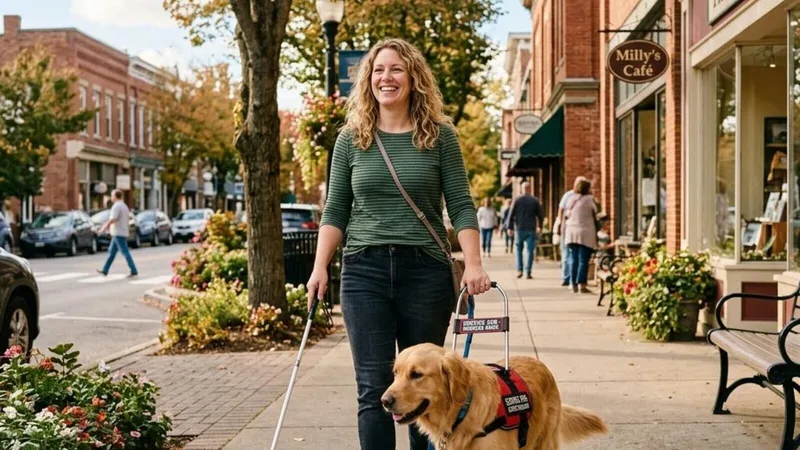
Every year during the first full week of August, people around the world celebrate International Assistance Dog Week. In 2026 it runs from August 3 through August 9. The week honors the hard-working dogs that help people with disabilities live full, independent lives. It also thanks the trainers and puppy raisers who prepare these amazing animals for their jobs.
At Disability Network Lakeshore, independence is at the heart of everything we do. For many people in Ottawa and Allegan counties, an assistance dog is a partner in that independence. This week is a great time to learn what these dogs do, how the different types differ, and how to act around a working dog.
What is an assistance dog?
An assistance dog is a dog trained to do specific tasks for a person with a disability. These are not pets, and they are not the same as emotional support animals. Under the Americans with Disabilities Act (ADA), a service dog is trained to perform tasks directly related to a person's disability. Because of that training, service dogs can go with their handler almost anywhere the public can go: stores, restaurants, buses, medical offices, and more.
Training an assistance dog takes time. Many dogs spend eighteen months to two years learning their tasks before they are matched with a handler. The bond that forms between a dog and handler is one of trust, teamwork, and deep friendship.
Guide dogs
Guide dogs are probably the best-known type of assistance dog. They work with people who are blind or have low vision. A guide dog helps its handler walk safely by steering around obstacles, stopping at curbs and steps, and finding doors and crossings. The handler gives directions, and the dog makes sure the path is safe. This teamwork is sometimes called "intelligent disobedience": a guide dog will refuse a command that would put its handler in danger, such as stepping into traffic.
Mobility assistance dogs
Mobility assistance dogs help people who have trouble moving, balancing, or reaching. Depending on the handler's needs, a mobility dog may pick up dropped items, open and close doors, push elevator buttons, pull a manual wheelchair up a ramp, or brace so the handler can stand or steady themselves. For someone with limited strength or range of motion, these tasks can be the difference between needing help all day and living on their own terms.
Psychiatric service dogs
Psychiatric service dogs are trained to help people with mental health disabilities such as post-traumatic stress disorder (PTSD), severe anxiety, or depression. These dogs perform real, trained tasks. They may wake a handler from a nightmare, interrupt a panic attack, create personal space in a crowd, remind a handler to take medication, or guide them to an exit when a situation becomes overwhelming. Because their handler's disability is often invisible, psychiatric service dog teams sometimes face doubt in public. They have the same legal rights as any other service dog team.
Medical alert dogs
Medical alert dogs use their powerful noses and sharp attention to warn handlers about medical events before or as they happen. A diabetic alert dog can smell changes in blood sugar and alert its handler to a dangerous high or low. A seizure response dog may stay with a person during a seizure, fetch help or a phone, or move the person away from danger. Some dogs alert to heart-rate changes or severe allergens. For handlers and their families, these dogs bring safety and peace of mind.
How to act around a working dog
When you see an assistance dog in our community, the kindest thing you can do is let it work. A few simple rules help every team stay safe:
- Don't pet or call the dog. Distracting a working dog can put its handler at risk. Always ask first, and accept "no" gracefully.
- Don't offer food. Assistance dogs follow careful diets and feeding schedules.
- Speak to the person, not the dog. The handler is the one you're talking with.
- Keep your own pets back. Give working teams room to pass.
- Ask only what the law allows. A business may ask just two questions: Is the dog required because of a disability? What task is it trained to perform?
Thinking about a service dog?
If you or a loved one wonders whether a service dog could help, you are not alone. It is one of the most common questions we hear. Our earlier post, How Do I Get a Service Dog?, walks through the steps, and our Service Animal Questions and Answers covers your rights in housing, work, and public places. Our Information & Referral team can also help you find reputable training organizations and local resources. Just call (616) 396-5326. Our services for individuals are always free.
This International Assistance Dog Week, join us in celebrating these remarkable dogs and the independence they make possible. To every assistance dog on the Lakeshore: good dog. Very good dog.
Our world still has barriers for people with disabilities.
Whether you're an individual or a company, searching for disability resources is discouraging and frustrating. And when you don't have the right tools, individuals and communities suffer. Wouldn't you like to live in an inclusive community where everyone can participate, contribute, and belong?
The right resources are hard to find. We get it.
We understand how it feels to struggle to fully participate in an inaccessible community, which is why we help people find and use disability resources.