
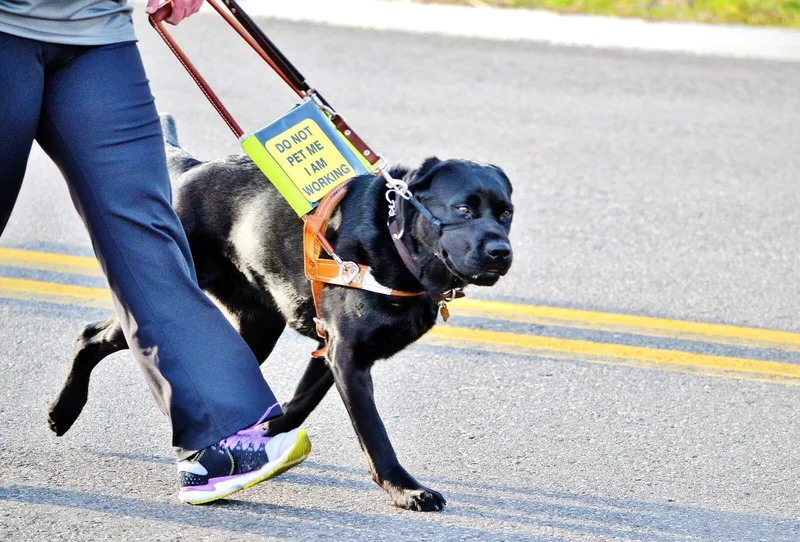
Recently, there has been an increase in the number of people calling the DNL office to ask about how they can get a service dog. In most instances, people with disabilities aren’t able to buy a trained service dog. With the initial cost of the animal, care and training, it can cost anywhere from $5,000 to $70,000 to buy a trained dog, depending on what it is trained to do.
That price can feel out of reach for many people. It is one reason people start asking what their other choices are. If you are thinking about a service dog, it helps to start by learning what service dogs do, how they are different from other support animals, and what it takes to train one. That way, you can make a better plan and know what to expect.
What Service Dogs Can Do
Service dogs can do a lot more than just act as guide dogs. These days they are trained to assist with preventing children with autism from harming themselves; alerting owners with hearing impairments to the sound of the phone or doorbell ringing, or when the smoke alarm sounds; providing a way of balancing when going up or down stairs, blocking people with PTSD from others crowding to close to them, and much, much more.
These dogs can be trained for very specific jobs. For one person, a dog may help with safety. For another, the dog may help with hearing, balance, or personal space. The task has to match the person’s disability. That is what makes a service dog different from a pet or from other types of animals that offer comfort.
It can help to think about the exact problems you want the dog to help with. For example, if stairs are hard for you, balance support may matter. If you do not hear alarms well, alert work may matter more. If crowds make you feel unsafe, a dog that blocks space may be useful. Knowing your needs can help you figure out whether a service dog is the right fit.
Know the Difference Between Animal Types
It helps to understand the difference between types of assistance dogs. Emotional support dogs are not service dogs as no specific training is required. They provide emotional stability and acceptance to their owners by helping them manage their anxiety during times of stress. Therapy dogs visit nursing home residents and patients in hospitals to help cheer them up. Service dogs must be trained to perform a specific task for someone with a disability. The action the dogs takes must lessen the impact of the disability and the dog must have special training to do what it does.
This difference matters because people often use the terms in the wrong way. An emotional support dog may be very comforting, but comfort alone does not make it a service dog. A therapy dog may do good work in a hospital or care setting, but that is not the same as helping one person with a disability in daily life. A service dog must be trained to do a job that directly helps with a disability.
If you are unsure which type of animal fits your needs, ask yourself what the animal will actually do. If the animal is there mainly to help you feel calmer, it may be an emotional support animal. If the animal is trained to take action because of your disability, it may be a service dog. That simple question can make the difference.
Training Takes Time and Work
Service dogs can be trained by their owners, but it certainly helps to have a professional trainer helping. The dog must have a quiet, confident disposition, receive training in basic and advanced obedience, as well as the training for whatever action is required to mitigate the owner’s disability. It’s a lot of effort that goes into the training of these animals, but then, in the end, you have a companion that will serve you for the rest of his or her life!
That training does not happen overnight. A dog has to learn how to act in public, stay calm, and follow commands in different places. It also has to learn the special task that helps the owner. Some dogs are not a good fit for this kind of work. A service dog needs the right personality, not just a cute face or a friendly nature.
If you are training your own dog, patience is important. Start with the basics. Work on sitting, staying, coming when called, and walking well on a leash. Then build on that foundation. A dog that cannot handle everyday obedience will have a hard time learning a more complex job. Small steps matter.
It can also help to practice in places with more distractions. A dog that does well at home still needs to stay focused in stores, parking lots, offices, and other public spaces. That is one reason professional help can be so useful. A trainer can point out problems early and help you stay on track.
What to Think About Before You Start
If you think a service dog might increase your independence, then consider training your own. Assistance is available, and although you’ll have to put considerable time and effort into the project, in the end, it might be the only way you’ll get a trained dog.
Before you begin, it may help to ask a few practical questions:
- What exact job do I need the dog to do?
- Is my home set up to care for a dog every day?
- Do I have the time for training, feeding, exercise, and vet care?
- Will I need help from a trainer or another support person?
- Am I ready for a long-term commitment?
These are not small questions. A service dog becomes part of daily life. The dog will need food, care, grooming, exercise, and ongoing training. The dog will also need your patience. In return, you may gain a partner that helps you move through your day with more confidence.
If you are not sure where to begin, DNL may be able to help you think through your options. Our services are free. You can call us at (616) 396-5326. We can talk with you about disability-related needs and help you look at possible next steps.
Getting Ready for the Long Term
Thinking about a service dog means thinking beyond the first training session. It means looking at the whole picture. You may need to plan for supplies, vet visits, and time for learning. You may also need to think about how the dog will fit into your work, home, and community life.
It may help to write down your reasons for wanting a service dog. You can list the tasks you want help with and the problems you want to reduce. That list can help you explain your needs to a trainer or another helper. It can also help you stay focused if the process feels slow.
Some people hope a service dog will solve every problem. That is not how it works. A service dog is one tool. It can make life easier and more independent, but it still takes work from the owner. The best results often come from careful planning and steady training.
Still, for the right person and the right dog, the bond can be powerful. The dog is not just working. It is also a loyal companion. That is part of why people are willing to put in so much effort. In the end, the relationship can last for years and can make daily life much better.
If you think a service dog might help you, take the time to learn more and plan carefully. The process may be long, and the cost may be high, but with the right support, it can be worth it.