
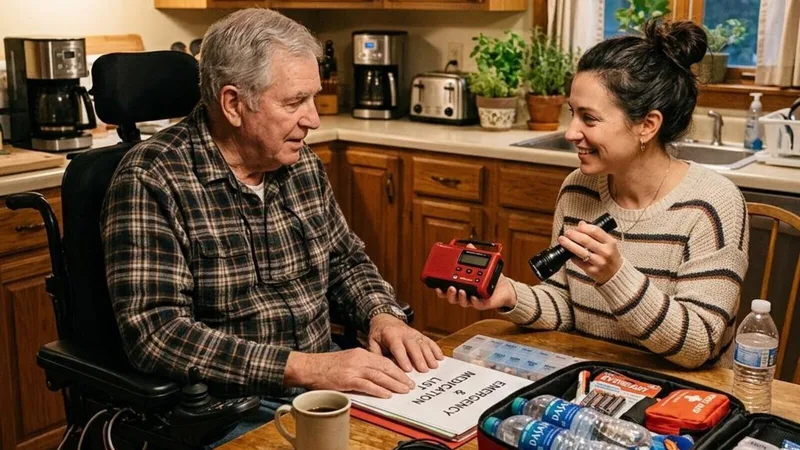
September is National Preparedness Month, a yearly reminder that emergencies don't wait for a convenient time. Here on the Lakeshore, we know what west Michigan weather can do: ice storms that knock out power for days, summer thunderstorms, flooding, and lake-effect snow that closes roads fast.
For people with disabilities, emergency planning is not extra credit. It is essential. During a disaster, the systems we count on every day (electricity, elevators, transportation, pharmacies, and home care) can all fail at once. A plan made today keeps a hard day from becoming a dangerous one.
Why planning matters more when you have a disability
Studies after major disasters tell the same story: people with disabilities are two to four times more likely to be injured or die in an emergency than people without disabilities. Not because of their disabilities, but because plans, shelters, alerts, and evacuation routes were not designed with them in mind.
The good news is that most of that risk can be planned away. The goal is simple: know what you need every day, and figure out now how you would meet those needs if everything shut down for 72 hours.
Build your support network
Your most important emergency supply is people. Choose at least three people you trust, such as neighbors, family, friends, or coworkers, who agree to check on you in an emergency. Then:
- Give them a key, and show them how your equipment works: how to move your wheelchair, where medications are kept, and how your lift or communication device operates.
- Agree on how you'll reach each other if phones are down, and pick a meeting place.
- Choose an out-of-area contact everyone can call, since long-distance calls sometimes work when local lines are jammed.
Pack a go-kit that fits your needs
Start with the basics every kit needs: water (one gallon per person per day for three days), non-perishable food, flashlight, first aid kit, chargers, and copies of important papers. Then add what makes the kit yours:
- Medications. At least a seven-day supply, plus a written list of every medication, dose, and prescriber.
- Equipment basics. Backup hearing aid batteries, glasses, catheter or ostomy supplies, patch kits for wheelchair tires, an extra cane.
- Medical information card. A short written summary of your disability, allergies, equipment, and emergency contacts is vital if you cannot speak for yourself.
- Communication tools. A whiteboard or cards with key phrases if you communicate without speech; a printed contact list in large print or braille if you need it.
- Service animal supplies. Food, water, medications, vaccination records, and a photo of you with your animal.
Plan for power
If you rely on powered equipment, such as a power wheelchair, oxygen concentrator, CPAP, or refrigerated medication, power outages are your biggest risk. Take these steps now:
- Contact your utility and ask to be listed as a customer who uses life-support equipment. Many utilities prioritize these homes for restoration.
- Know your battery life, and keep backup batteries charged. A car inverter can charge many devices in a pinch.
- Ask your medical supplier about manual backups, like a manual wheelchair or non-powered alternatives.
- Keep coolers and ice packs ready for refrigerated medications, and ask your pharmacist how long each medication lasts unrefrigerated.
Sign up for local alerts
You can't act on a warning you never receive. Ottawa County residents can sign up for emergency notifications through the county's alert system at miottawa.org, and Allegan County offers alerts through allegancounty.org. Choose text alerts if you are Deaf or hard of hearing, and make sure a member of your support network gets the same alerts you do.
Practice, then relax
Once your plan exists, walk through it once. Can you reach your kit? Do your helpers know their roles? Ten minutes of practice now buys real calm later. Then review the plan twice a year. When the clocks change is an easy reminder.
Want more? We've written about preparedness before. See Emergency Preparedness Planning with a Disability and No Power for going deeper. And if you need help building your plan or finding backup equipment, our Information & Referral team and Loan Closet are here. Call (616) 396-5326. Our services for individuals are free.
Our world still has barriers for people with disabilities.
Whether you're an individual or a company, searching for disability resources is discouraging and frustrating. And when you don't have the right tools, individuals and communities suffer. Wouldn't you like to live in an inclusive community where everyone can participate, contribute, and belong?
The right resources are hard to find. We get it.
We understand how it feels to struggle to fully participate in an inaccessible community, which is why we help people find and use disability resources.