
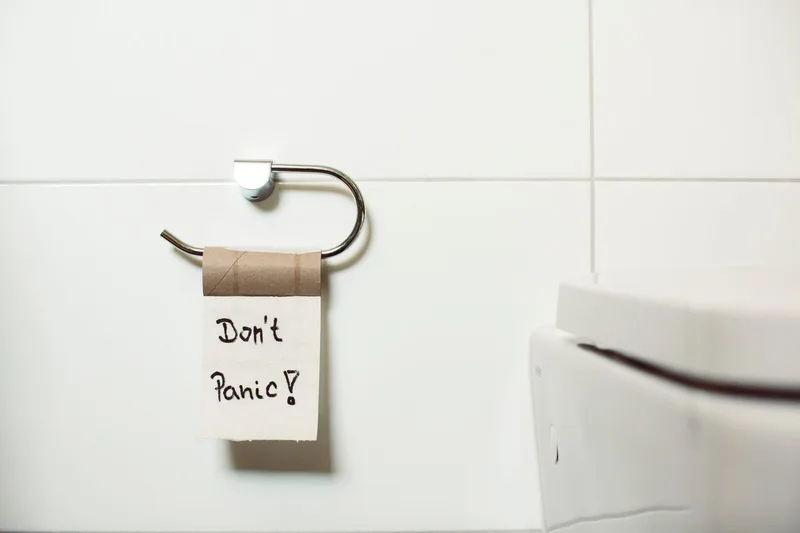
If you haven’t started to put together an emergency plan and the reason is that you feel overwhelmed by the complexity of the project, then break it down into smaller steps. Just take one step at a time. Any preparation you make will put you one step ahead of the rest of the population. And any preparation you make will make it easier for you to survive a disaster.
That may sound like a big job, but it does not have to be. A lot of people hear “emergency plan” and think they have to do everything at once. They picture long forms, lists, supplies, and a lot of hard work. That can stop people before they even begin. But you do not need to finish the whole plan in one day. You only need to begin with one small part. Once you get started, the rest can come later.
So, what’s your first step? How about simply thinking about how you would reconnect with your family and friends if a disaster were to strike. This is a good place to start because after an emergency, people often get separated. Phones may not work well. Roads may be blocked. Power may be out. A simple way to reach each other can save time and worry. It can also help everyone know who is safe and where they are.
Think about it this way, suppose there was a tornado that touched down in your neighborhood. You came through it okay, but your home is completely destroyed. How would you let your family members know you’re okay? In that moment, you may not have your usual things with you. You may not have your address book, your charger, or even a safe place to sit down. Planning ahead means you do not have to solve all of that while you are upset and trying to figure out what comes next.
If you have three children you want to contact, and a stranger is willing to let you use his phone for one call, who would you call? And, if you have multiple children, how can you let them know you’re okay too, especially if your first call goes unanswered? These are the kinds of questions that help you build a real plan. It is not just about having a phone number. It is about knowing the order of your calls and what you will do if the first step does not work. You may decide to call one person, then use that person to reach others. You may decide that text messages are easier than phone calls if lines are busy. The important part is to think it through before an emergency happens.
Designing a communication plan doesn’t have to be that difficult. Think about a family member or friend that everyone in your family knows and has their phone number or email address. Make sure all your family members know this is the person to contact if something happens. That friend or family member will let all the others know you’re okay if you contact them. Each of your family members should know that person’s contact information.
It helps to choose someone who is easy for everyone to trust and remember. For example, this might be a grandparent, aunt, uncle, cousin, close friend, or neighbor. Pick someone who does not live too close to the same disaster area, if you can. That way, if the local phones are busy or the neighborhood is affected, you may still have another way to pass along the message. Write the contact information down in more than one place. Put it in a wallet, on the fridge, and with any emergency papers you keep together. If someone in the family uses a cell phone, make sure the number is saved there too.
You can also make the message itself simple. “We are safe.” “We are at home.” “Call this person next.” Short messages are often easier when you are stressed. Children can also learn a simple message ahead of time so they know what to say if they are the one who gets through. Practice it once in a while so it feels familiar. A plan works better when everyone knows their part.
Then take one more step: choose a place you can meet if something happens just in your home. If your home had a fire, where would you meet? Perhaps it’s at the end of your driveway, or across the street. It has to be somewhere close where you can gather to make sure you are all accounted for and are all okay. Every member of your family needs to know where that is too.
When you choose a meeting place, think about safety first. It should be a spot everyone can get to without crossing danger. It should be easy to remember, even for children or someone who gets confused during a crisis. If you live in an apartment, your meeting place might be outside by a mailbox, a gate, or another clear spot nearby. If you live in a house, the end of the driveway or a neighbor’s yard may work. The best place is one that your whole family can point to quickly without guessing.
It can help to talk through a few different kinds of emergencies. A fire is one example. A tornado or severe storm is another. A power outage, flood, or medical emergency may also mean people need to meet in a certain place or call a certain person. You do not have to build a different plan for every possible event. You can make one basic plan that works in many situations, then adjust it as needed. That keeps things simple.
Write down what you decide as you go. Do not rely on memory alone. Stress can make it hard to think clearly, and people may forget details. A written plan is easier to share with others in your home. It also makes it easier to update later if a phone number changes or if you move. Keep the paper in a place that is easy to find. You can also keep a copy in a bag you would take with you if you had to leave quickly.
If you use a wheelchair, service animal, cane, hearing aid, or other support, your emergency plan should include those needs too. Think about how you would get where you need to go. Think about what you would bring. Think about who could help if you needed support from another person. Planning for disability-related needs is part of being ready. If you want help thinking through those steps, Disability Network Lakeshore can help. Our services are free. You can call us at (616) 396-5326.
Okay, that’s the beginning of making your communications plan. You can expand it next week by thinking of someone out of town you can use to connect with if the person in your immediate area isn’t available. Designing a plan does not have to be a horrendous project. Take it one step at a time, and write down what you decide as you go. Pretty soon, you’ll have your entire plan mapped out.
A good way to keep moving is to set one small goal at a time. Today, choose the family contact. Tomorrow, choose the meeting place. Next, write both down. After that, share the plan with everyone in your home. If you want, walk through it together. Ask each person what they would do. This kind of practice can make the plan easier to remember later. Even a short conversation can help a lot.
Do not wait until you have the perfect plan. A simple plan is better than no plan. One step may not feel like much, but one step can lead to the next. That is how you build readiness without feeling lost. Start small, keep it clear, and keep going.
If you would like support with emergency readiness, or with other disability-related needs, DNL is here for you. We serve people with disabilities in Ottawa and Allegan counties, Michigan. Call (616) 396-5326 if you want to learn more about our free services.