It can be a challenge to be disabled, but when you add the functional losses that come with aging, you may find yourself struggling to remain independent. There are some things you can do to make it easier on yourself though. You may want to consider having a home and an assistive technology assessment done. It can help identify problem areas and offer suggestions for modifications and assistive devices that may keep you living at home for years to come.
A home assessment is a simple walk-through of your living space. The goal is to look at the places that may be hard to use, unsafe, or just plain tiring. An assistive technology assessment looks at tools or devices that may help you do daily tasks with less effort. Together, these assessments can help you stay safer, save energy, and keep doing more on your own.
For instance, do you worry that you’ll walk out of the kitchen leaving something cooking on the stove and start a fire? You may want to consider using a stove with an automatic shut-off feature. Or do you care for someone with dementia? Installing a lock on the door leading outside that is located higher on the door can help prevent your loved one from wandering outside in the cold.
These are the kinds of real-life concerns that can come up every day. A good assessment can help you think through your routine, room by room. Sometimes the safest fix is a device. Sometimes it is a change in how a room is set up. And sometimes it is a small habit change that makes a big difference.
Are you afraid of being scalded while you’re taking a shower and you’re too slow adjusting the hot water temperature? You can have an anti-scald device, or a temperature regulator installed. Or the answer may be as simple as turning down the temperature on the hot water heater a few degrees.
Even a small change like that can matter a lot. Lowering the water heater temperature can help reduce the risk of burns. An anti-scald device can also help keep water from getting too hot too fast. If you have trouble standing for long periods, a shower chair, grab bars, or a handheld shower head may also make bathing easier and safer.
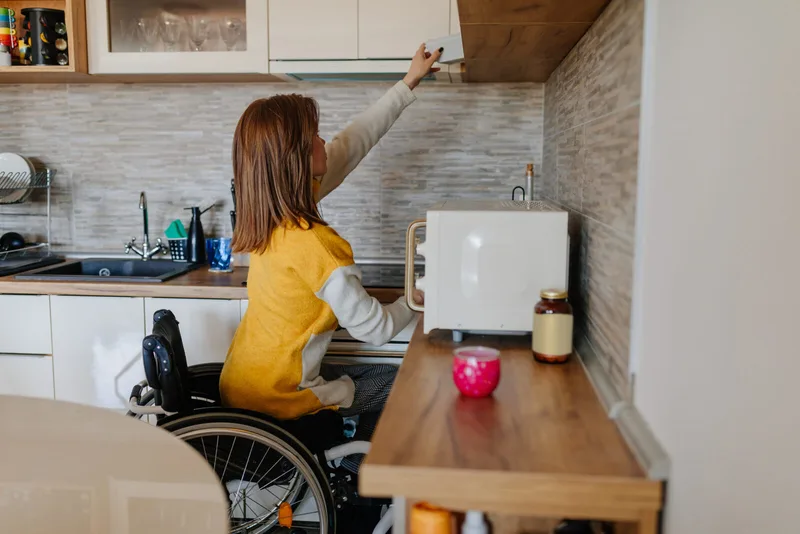
If you’re using a wheelchair and have to make your own meals, are counters at the correct height for you? Do you have cupboards that are out of reach? If you’re hard of hearing, will you hear the smoke alarm or the carbon monoxide detector if it goes off? There are potential solutions for all of this, and most of it is low-cost.
For someone who uses a wheelchair or has trouble standing, kitchen access can be a daily barrier. A counter that is too high can make cooking hard. Shelves that are too high can make it unsafe to reach for dishes or food. In some cases, moving often-used items to lower shelves, using a rolling cart, or clearing space under a sink or counter can help. For someone who is hard of hearing, alarms with flashing lights or bed shakers may be helpful. For someone who is blind or has low vision, talking devices or alerts with strong vibration may make a big difference too.
Disability Network/Lakeshore has staff that will come to your home and do a walk-though with you and assess whether there are home modifications you can use to make it easier to stay in your home, or identify assistive devices that might prove beneficial.
This can be helpful if you are not sure where to start. Many people know something feels hard, but they cannot always name the problem or the fix. Our staff can help you look at the whole picture. We can talk through what happens when you get up, bathe, cook, answer the door, or move from one room to another. We can also help think about safety needs, comfort, and ways to make daily tasks less stressful.
Following the assessment, you’ll receive a written copy of the report listing problems and suggestions for resolving them. If there are assistive devices that may make things easier for you, we’ll include suggestions, price quotes and contact information for ordering.
That written report can be useful when you are making plans. It gives you a clear list of concerns and ideas to consider. You can use it to decide what to do first, what might wait, and what might be best for the future. If cost is a concern, having price quotes and contact information in one place can make it easier to compare options and shop carefully. Many changes are low-cost, and some may be as simple as moving furniture, changing a light bulb, or adding a small tool that saves time and strain.
If you are interested in scheduling a home/A.T. assessment, call Disability Network/Lakeshore at 616-396-5326. There is no charge for this service.
If you are not sure whether an assessment would help you, it is still worth calling. A short conversation can help you decide what kind of support fits your needs. DNL is here to help people in Ottawa and Allegan counties find ways to live more independently, and our services are free.
Why these assessments matter
Living at home can feel much easier when your space matches your needs. That does not mean your home has to be fully remodeled. In many cases, a few small changes can remove the biggest barriers. The point is not to make your home perfect. The point is to make it work better for you.
These assessments can also help if your needs have changed over time. Maybe you could manage stairs before, but now they are harder. Maybe you were fine using a standard shower before, but now balance is a concern. Maybe you have started caring for a family member with memory loss and need to think about safety in new ways. A home and assistive technology assessment can help you respond to those changes before a small problem becomes a bigger one.
Common changes that may help
Every home is different, but some ideas come up often.
- Installing grab bars near the tub, shower, or toilet
- Adding better lighting in halls, stairs, and entryways
- Moving daily-use items to easier-to-reach places
- Using alarms or alert devices with lights or vibration
- Adding door locks or safety devices for someone who wanders
- Choosing tools that are easier to hold or operate
- Adjusting water temperature to reduce burn risk
- Using a stove safety device to help prevent fires
These are just examples. What helps one person may not help another. That is why a walk-through can be useful. It focuses on your home, your routine, and your needs.
A small step can protect your independence
Many people wait until they have had a fall, a scare, or a close call before asking for help. But you do not have to wait for that. Planning ahead can help you stay safe and independent longer. It can also give family members and caregivers more peace of mind.
If you are a person with a disability, an older adult, or someone caring for a loved one with changing needs, a home and assistive technology assessment may give you practical ideas you had not thought of yet. The right change does not have to be expensive or complicated. It just has to work for you.
To learn more or set up an assessment, call Disability Network/Lakeshore at 616-396-5326. We are glad to help, and there is no charge.