Everyday Respect, Made Simple
Most people want to be respectful. They are just not always sure what to say or do. These simple guidelines can help you interact with confidence, whether you are at work, at school, or out in the community.
Follow the Person's Lead on Language
Language preferences vary. Some people prefer person-first language ("person with a disability"), while others prefer identity-first language ("disabled person" or "Autistic person"). When in doubt, ask, and then use the words the person uses for themselves. It is also best to describe the disability only when it is relevant, rather than making it the first or only thing you mention about someone. Focus on the person, not the diagnosis.
Speak Directly to the Person
If someone has an interpreter, aide, or support person, speak directly to the individual, not the interpreter or companion, and maintain normal eye contact with the person you are communicating with. Talk in your normal tone and at your normal pace. There is no need to speak louder or more slowly unless the person asks you to. Address adults as adults, and use the person's name the same way you would with anyone else.
Ask Before Offering Help
Many people with disabilities are independent and may not need assistance. Offer help if you like, but wait for a yes before stepping in. Then listen to how the person wants it done, since they know their needs best. If your offer is declined, do not take it personally. Respecting someone's "no" is its own form of respect.
Interacting Respectfully Across Different Disabilities
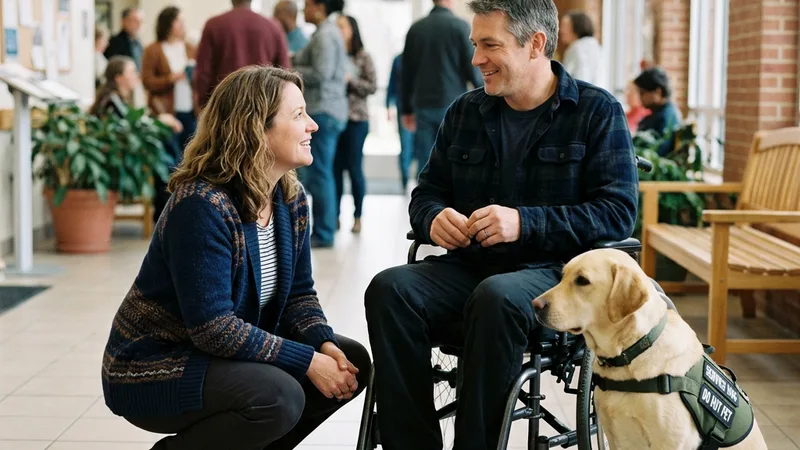
Every person is different, but a few simple habits help across many situations. When talking with someone who is Deaf or hard of hearing, face them, keep your mouth visible, and be patient if they ask you to repeat or write something down. When speaking with someone who is blind or has low vision, introduce yourself when you approach and say when you are leaving, and offer your arm rather than grabbing theirs if they would like a guide. When talking with a wheelchair user for more than a moment, sit or position yourself at eye level so they are not straining to look up. When communicating with someone who has a cognitive, learning, or speech disability, use clear, plain language, give the person time to respond, and never finish their sentences for them. Remember that most disabilities are not visible, so keep the same respect and patience for everyone.
Service Animal Etiquette
A service animal is working, not a pet. Do not pet, feed, talk to, or otherwise distract a service animal, even if it looks friendly, because a distraction can put its handler at risk. Do not ask the person to explain their disability, and do not separate a person from their service animal. If you are curious, it is fine to ask whether it is okay to interact, but always accept "no" gracefully. Speak to the person, not the animal, and let the team go about their day.
Respect Personal Space and Mobility Equipment
Mobility devices are part of a person's personal space. Do not lean on, push, or move a wheelchair, walker, scooter, or cane without permission, and do not touch or move devices while a person is using them. Ask before you help with a door, a ramp, or a tight space, and follow the person's directions. Treating equipment as an extension of the person is a small courtesy that makes a big difference.
Use Plain, Respectful Language
Use neutral, everyday language. Avoid outdated or offensive terms and phrases that frame disability as tragedy or heroism. For example, say "accessible parking" instead of "handicapped parking," and avoid calling people "inspiring" simply for living their lives.
Accessibility Is Everyone's Responsibility
Accessibility should be built into everyday environments and events, from clear walkways and accessible seating to captioned videos and accessible documents. Inclusive design benefits everyone.
Want to Go Deeper?
We offer customized training sessions to improve understanding, accessibility, and inclusion in workplaces, schools, and local organizations, plus ADA consulting to help your organization become more inclusive and confidently compliant. You can also browse our disability FAQ for plain-language answers to common questions.